donderdag 22 mei 2014

Ghana to stop handing out gold exploration permits

Ghana to stop handing out gold exploration permits 

22-05-2014  Cecilia Jamasmie | Mining.com

Ghana to stop handing out gold exploration permits 
Africa's second-largest gold producer, Ghana, will stop issuing new gold prospecting permits for an initial 90-day period, while it works on making an inventory of unused concessions, the country’s minerals commission said Thursday.

Tony Aubynn, the commission’s head, told Reuters the audit would allow the government to free up permits that can be reallocated, but warned the three-month moratorium on new warrants could be extended if necessary.

The move could be risky for the West African nation, which has been experiencing a major and ongoing drop in gold production as of late. With the gold price dropping by an average of 28% in 2013 and not doing much better this year, many mining companies operating in the country, such as AngloGold Ashanti (NYSE:AU), Newmont (NYSE:NEM) and Gold Fields (NYSE:GFI), have had to cut back.

Small-scale operations are also declining. But for them it's not just the price drop— a government crackdown on illegal mining has also affected production.

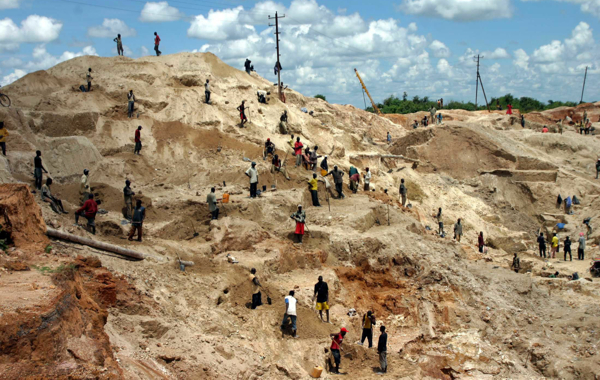
MINING.com has kept a close eye on illegal gold mining in Ghana. At its peak, an estimated 50,000 foreign workers, mainly Chinese, were operating unlawfully in the country. This prompted the government to create a taskforce in May last year to tackle the subject, and so avoid tension-generating issues, such as the massive deportation of almost two hundred of his compatriots, arrested and expulsed from Ghana last year.

Image: Aljazeera’s documentary screen grab

Ghana to stop handing out gold exploration permits

Ghana to stop handing out gold exploration permits 

22-05-2014  Cecilia Jamasmie | Mining.com

Ghana to stop handing out gold exploration permits 
Africa's second-largest gold producer, Ghana, will stop issuing new gold prospecting permits for an initial 90-day period, while it works on making an inventory of unused concessions, the country’s minerals commission said Thursday.

Tony Aubynn, the commission’s head, told Reuters the audit would allow the government to free up permits that can be reallocated, but warned the three-month moratorium on new warrants could be extended if necessary.

The move could be risky for the West African nation, which has been experiencing a major and ongoing drop in gold production as of late. With the gold price dropping by an average of 28% in 2013 and not doing much better this year, many mining companies operating in the country, such as AngloGold Ashanti (NYSE:AU), Newmont (NYSE:NEM) and Gold Fields (NYSE:GFI), have had to cut back.

Small-scale operations are also declining. But for them it's not just the price drop— a government crackdown on illegal mining has also affected production.

MINING.com has kept a close eye on illegal gold mining in Ghana. At its peak, an estimated 50,000 foreign workers, mainly Chinese, were operating unlawfully in the country. This prompted the government to create a taskforce in May last year to tackle the subject, and so avoid tension-generating issues, such as the massive deportation of almost two hundred of his compatriots, arrested and expulsed from Ghana last year.

Image: Aljazeera’s documentary screen grab

woensdag 21 mei 2014

Blokkade weg naar Afobaka door inwoners Balingsoela opgeheven

Brunswijk zorgt voor rust onder porknokkers
'Vriendjes in kringen commissie Ordening Goudsector’ in gebied Suralco waaruit porknokkers Balingsoela waren verwijderd

21-05-2014


Paramaribo - De inwoners van Balingsoela hebben de weg naar Brokopondo Centrum en naar Afobaka rond vijf uur vanmiddag, woensdag 21 mei 2014, opgeheven, door tussenkomst van ABOP-voorzitter en parlementariër Ronnie Brunswijk, die vergezeld was van A Combinatie-Assembleelid Diana Pokie en minister Edward Belfort van Justitie en Politie. Dit bericht Starnieuws.

De dorpelingen en porknokkers uit omgeving Balingsoela hebben problemen met de commissie Ordening Goudsector. Het gaat om de kwestie dam 10. Er werden goudactiviteiten ontplooid in het concessiegebied van de Suralco waar zich hulpdammen bevinden. De commissie Ordening Goudsector heeft ze enige tijd terug uit dat gebied verwijderd.

Nu blijkt volgens hen dat ‘vriendjes in de kringen van de commissie’ zich in dezelfde omgeving bevinden. Voorts zitten ze met een elektriciteitsprobleem. Geruime tijd is er sprake van elektriciteitsschommelingen met als gevolg dat hun apparaten kapot gaan. Ook het waterprobleem werd aangehaald.

Een ander brandende kwestie is die van een ondernemer die in de omgeving aan steenslagwinning doet. Deze ondernemer blijkt dynamiet te gebruiken voor de winning, waardoor stofwolken en geluidsoverlast aan de orde van de dag zijn.

Besloten is dat de vertegenwoordigers van de actiegroep binnen een week met de president om de tafel gaan. Brunswijk heeft opgeroepen niet te grijpen naar het uiterste middel. Wegbarricade is verstoring van de openbare orde. ‘Er is een districtscommissaris en er zijn parlementariërs waar de dorpelingen altijd nog terecht kunnen. Ik breng ze persoonlijk naar het hoogste gezag en dan ben ik ervan overtuigd dat er een oplossing komt’, sprak Brunswijk.

Noot:
En weer is er sprake van, dat in een goudwinningsgebied waaruit illegale porknokkers door de commissie Ordening Goudsector zijn verwijderd, binnen de kortste tijd goudzoekers actief zouden zijn uit de directe omgeving van de commissie. Waar rook is, is vuur. De geruchten over deze praktijken komen niet zomaar uit de lucht vallen. Deze commissie lijkt met een dubbele agenda te werken. Onlangs hebben de Assembleeleden Marinus Bee (ABOP) en Ronny Asabina (BEP) gepleit voor het opheffen van de commissie. Reden genoeg voor, zo lijkt mij...... ;-)

Blokkade weg naar Afobaka door inwoners Balingsoela opgeheven

Brunswijk zorgt voor rust onder porknokkers
'Vriendjes in kringen commissie Ordening Goudsector’ in gebied Suralco waaruit porknokkers Balingsoela waren verwijderd

21-05-2014


Paramaribo - De inwoners van Balingsoela hebben de weg naar Brokopondo Centrum en naar Afobaka rond vijf uur vanmiddag, woensdag 21 mei 2014, opgeheven, door tussenkomst van ABOP-voorzitter en parlementariër Ronnie Brunswijk, die vergezeld was van A Combinatie-Assembleelid Diana Pokie en minister Edward Belfort van Justitie en Politie. Dit bericht Starnieuws.

De dorpelingen en porknokkers uit omgeving Balingsoela hebben problemen met de commissie Ordening Goudsector. Het gaat om de kwestie dam 10. Er werden goudactiviteiten ontplooid in het concessiegebied van de Suralco waar zich hulpdammen bevinden. De commissie Ordening Goudsector heeft ze enige tijd terug uit dat gebied verwijderd.

Nu blijkt volgens hen dat ‘vriendjes in de kringen van de commissie’ zich in dezelfde omgeving bevinden. Voorts zitten ze met een elektriciteitsprobleem. Geruime tijd is er sprake van elektriciteitsschommelingen met als gevolg dat hun apparaten kapot gaan. Ook het waterprobleem werd aangehaald.

Een ander brandende kwestie is die van een ondernemer die in de omgeving aan steenslagwinning doet. Deze ondernemer blijkt dynamiet te gebruiken voor de winning, waardoor stofwolken en geluidsoverlast aan de orde van de dag zijn.

Besloten is dat de vertegenwoordigers van de actiegroep binnen een week met de president om de tafel gaan. Brunswijk heeft opgeroepen niet te grijpen naar het uiterste middel. Wegbarricade is verstoring van de openbare orde. ‘Er is een districtscommissaris en er zijn parlementariërs waar de dorpelingen altijd nog terecht kunnen. Ik breng ze persoonlijk naar het hoogste gezag en dan ben ik ervan overtuigd dat er een oplossing komt’, sprak Brunswijk.

Noot:
En weer is er sprake van, dat in een goudwinningsgebied waaruit illegale porknokkers door de commissie Ordening Goudsector zijn verwijderd, binnen de kortste tijd goudzoekers actief zouden zijn uit de directe omgeving van de commissie. Waar rook is, is vuur. De geruchten over deze praktijken komen niet zomaar uit de lucht vallen. Deze commissie lijkt met een dubbele agenda te werken. Onlangs hebben de Assembleeleden Marinus Bee (ABOP) en Ronny Asabina (BEP) gepleit voor het opheffen van de commissie. Reden genoeg voor, zo lijkt mij...... ;-)

Porknokkers Balingsoela barricaderen weg naar Afobaka

Goudzoekers ontevreden over hen toegewezen goudwinningsgebied

21-05-2014


Paramaribo - Porknokkers van Balingsoela in het district Brokopondo zijn in actie en hebben de weg naar Afobaka gebarricadeerd. Schoolbussen konden hierdoor leerlingen niet naar de scholen vervoeren. 

Het A Combinatie-Assembleelid Diana Poki heeft vandaag, woensdag 21 mei 2014, in De Nationale Assemblee aandacht van de regering gevraagd voor deze zaak voordat de zaak mogelijk escaleert, aldus bericht de Ware Tijd Online.

Poki pleit voor een structurele oplossing van het goudprobleem. De ruim 300 porknokkers vinden onder meer het gebied Mast 52, dat aan ze is toegewezen zijn voor kleinschalige goudwinning, niet lucratief.

Daarnaast pleit Poki voor een permanente ordening van de kleinschalige goudwinning. Met in acht neming van onder meer milieuaspecten en inkomstenderving voor de staat moet de sector geordend worden. Poki heeft de actievoerders opgeroepen het pad van dialoog te bewandelen.

Porknokkers Balingsoela barricaderen weg naar Afobaka

Goudzoekers ontevreden over hen toegewezen goudwinningsgebied

21-05-2014


Paramaribo - Porknokkers van Balingsoela in het district Brokopondo zijn in actie en hebben de weg naar Afobaka gebarricadeerd. Schoolbussen konden hierdoor leerlingen niet naar de scholen vervoeren. 

Het A Combinatie-Assembleelid Diana Poki heeft vandaag, woensdag 21 mei 2014, in De Nationale Assemblee aandacht van de regering gevraagd voor deze zaak voordat de zaak mogelijk escaleert, aldus bericht de Ware Tijd Online.

Poki pleit voor een structurele oplossing van het goudprobleem. De ruim 300 porknokkers vinden onder meer het gebied Mast 52, dat aan ze is toegewezen zijn voor kleinschalige goudwinning, niet lucratief.

Daarnaast pleit Poki voor een permanente ordening van de kleinschalige goudwinning. Met in acht neming van onder meer milieuaspecten en inkomstenderving voor de staat moet de sector geordend worden. Poki heeft de actievoerders opgeroepen het pad van dialoog te bewandelen.

zondag 18 mei 2014

Chinese gold miners face many obstacles to doing business in Ghana

(Bron foto)
Chinese gold miners face many obstacles to doing business in Ghana 

Miners from China face corruption, legal obstacles and even physical danger as they work the African country's soil for the precious metal

18-05-2014   Amy Nip in Kumasi and Obuasi, Ghana amy.nip@scmp.com, South China Morning Post

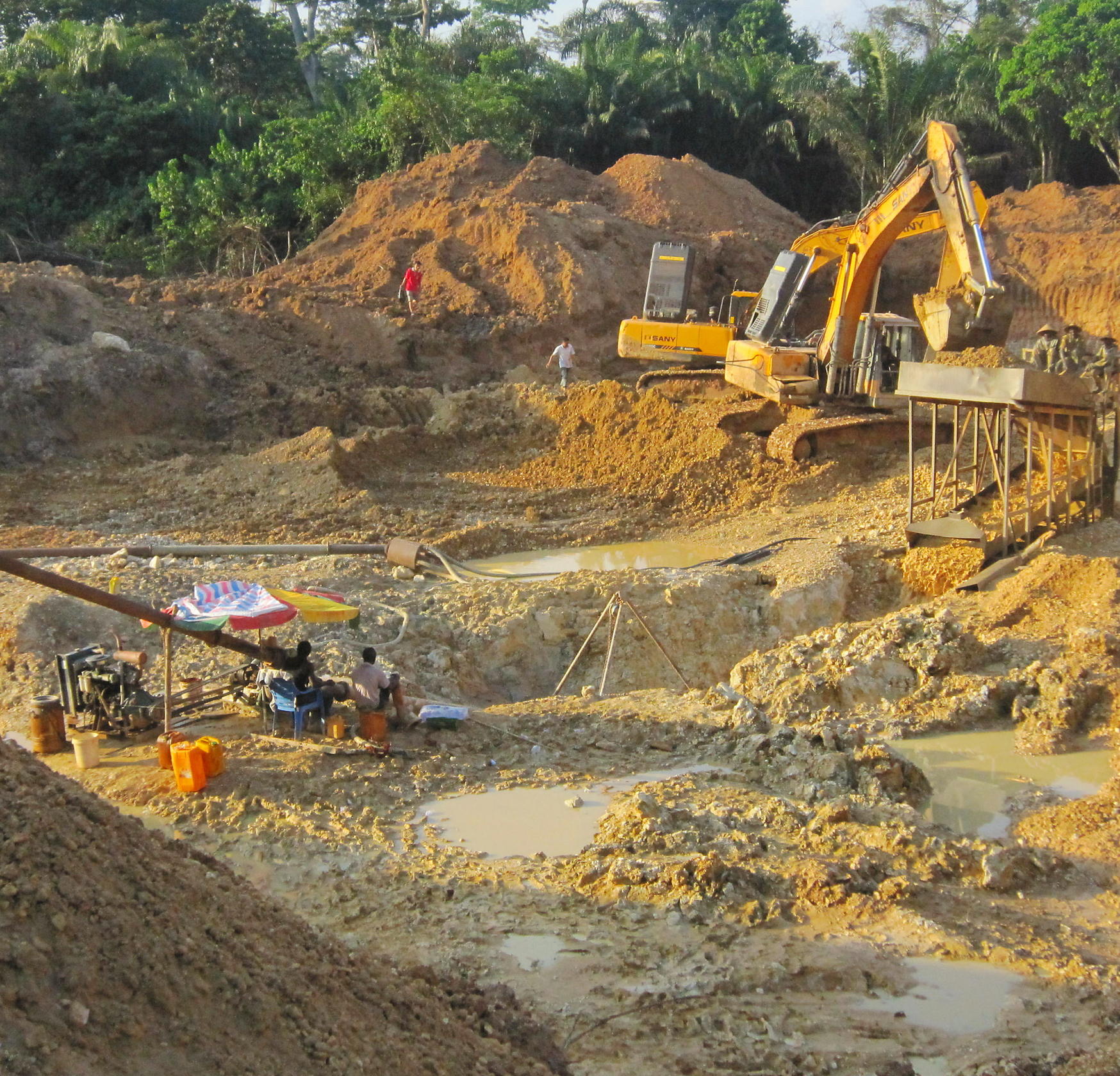
This gold mine in Obuasi, more than two hours' drive from Kumasi, the second-largest city in Ghana, is run by Chinese. Photo: Amy Nip 
A pickup sped through dense layers of tropical vegetation in Obuasi, a gold-mining region two hours from Ghana's second-largest city, Kumasi.

Suddenly the headlights illuminated two African men waving frantically by the dirt track in front of a car. The truck driver hesitated, but passenger Chen An, a Chinese mine owner, blurted out: "Don't stop! Go! Go! Go!"

The truck continued on. It was never safe, Chen explained, to stop on the road after sunset.

"Bandits block the road using cars or trucks. Once you stop the car, they will shoot you down," said Chen, who moved to Ghana from Changsha, in Hunan province, in 2002. Chinese have become the targets of criminals because of the fortunes they make from gold mining, he said. He could be a target too.

According to media reports, more than 20 Chinese miners have been killed in trips between mines and city centres or in shabby wooden houses where they stay next to mines.

Chinese miners are also often arrested and harassed, and targeted by corrupt officials, they claim.
Corruption would appear widespread. One afternoon police officers in Kumasi asked restaurant patrons for "fuel subsidies" to assist investigations.

While the pioneers arrived in Ghana more than a decade ago, the Chinese gold rush in the country started around 2006.
Rumours spread that a miner earned HK$700,000 a day by mining 2.4kg of gold, triggering an influx of Chinese miners in pursuit of quick cash, most of them from the poor Guangxi county of Shanglin.
The number of mines run by Chinese in partnership with locals peaked at more than 2,000 in 2012, a time when miners transferred more than a billion yuan from Ghana to Shanglin in a month, according to various media reports.

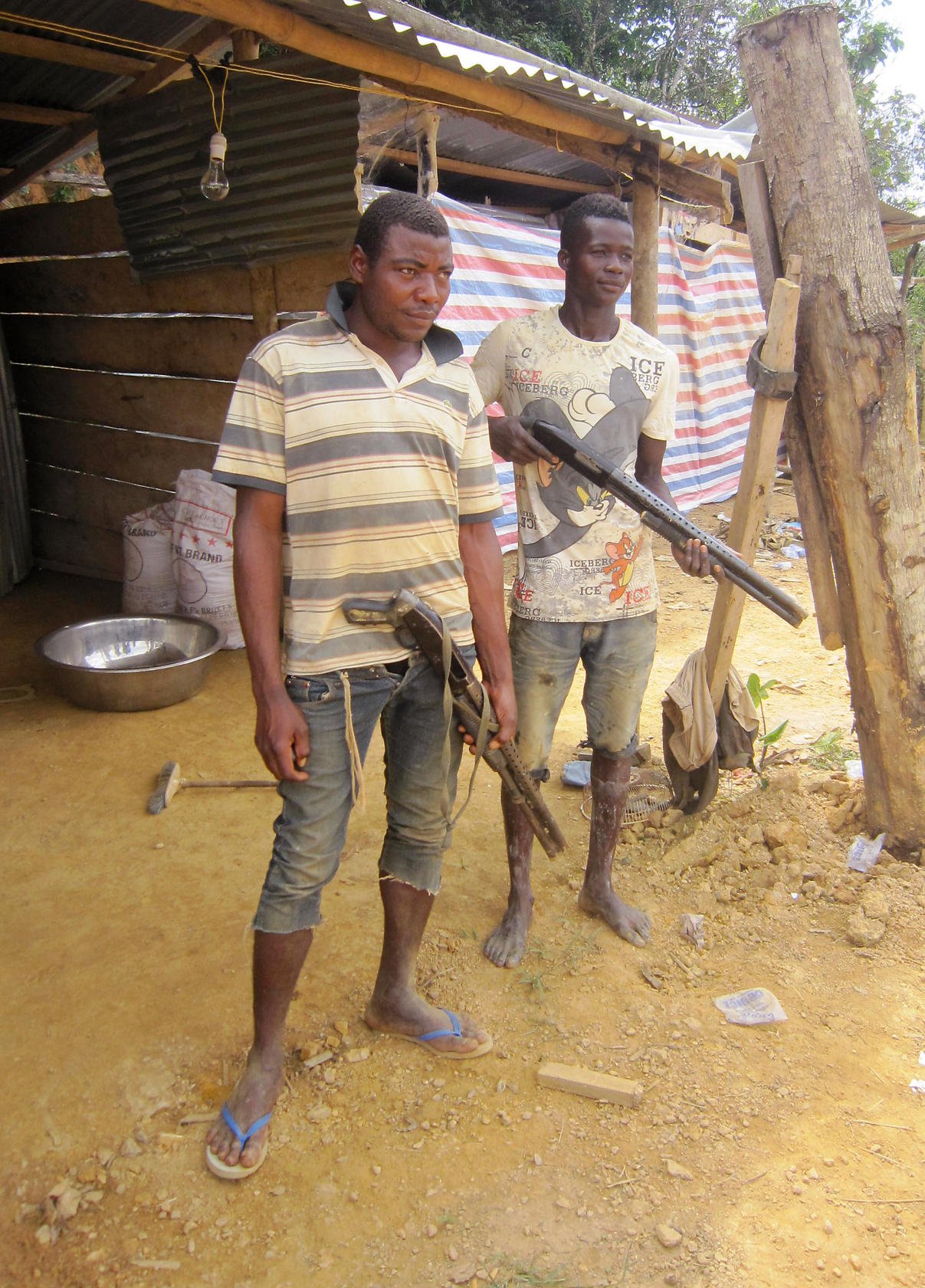
Some Ghanaians are employed by the Chinese as guards. Photo: Amy NipWhile Ghanaian laws state that only locals can perform small-scale mining, many Chinese workers in the past made use of a grey area, claiming they offered "technical assistance".

The mines would employ locals to operate big machines and serve as guards. The Chinese would often be employed to wash gold from filtered soil manually. The loophole in the law was plugged in 2012 when the government banned technical assistance altogether, citing environmental degradation and adverse social impacts.

Agence France-Presse reported that 4,700 illegal miners were deported from Ghana last year, most of them Chinese.

About 20,000 Chinese were in Ghana about two years ago, according to the Ghana Chinese Chamber of Commerce.

Chen was not convinced of the stated reasons for the ban.
The Ghanaians want the huge profits for their own, he said.

Before the Chinese came into the picture, Ghanaians also operated illegal small mines. They washed soil containing gold down a ladder manually, but the gold output was too small to make a profit.
That changed after the Chinese with their machines from their homeland mechanised the process.


Excavators dug up piles of soil, which were washed by workers using powerful hoses on a ladder throughout the day. Today only panning is done manually.

"Now the mines have become profitable, locals want the machines to stay and Chinese out of the country," Chen said.

More than 100 grams of gold can be captured a day, more than 10 times the yield of manual gold panning, said Su Zhenyu, secretary general of the Chinese Mining Association in Ghana.
Official estimates of the impact of Chinese gold mining on the Ghanaian economy are not readily found, but miners say their investment is huge. Each mine needs machinery including excavators, generators, pumps and filters.

Seven importers of machinery from China said they had sold several thousand excavators, each costing 1.2 million to 1.8 million yuan (HK$1.49 million to HK$2.24 million) to Chinese miners in Ghana.
Local landlords or tribal chiefs receive a goodwill fee of US$10,000 to US$20,000 per 10 hectares of land used for mining. They also share 10 to 15 per cent of the mines' daily profits. Farmers receive compensation for the destruction of their cocoa plants at a rate of 2 cedi (HK$5.34) per square metre. In comparison, a hotel worker in the country earns about 150 cedi a month.

But the goodwill that had built up was destroyed when the government started to clamp down on Chinese mines.

In 2012, a 16-year-old miner, Chen Long, was shot dead during operations, while other mining sites were filmed being burned down and having machinery taken away by local residents.

"The Chinese brought a revolution to the mining industry and stimulated economic growth. Why do the people treat us like this? Where does the hate come from?" Su asked.

It is the money that caused Chinese all the trouble, and there will be no end to it, Su said.
"First they wanted us to get working permits. We got them. Then they needed mining and environmental permits. We paid for them," he said.

Now they are challenging the legitimacy of the permits.
To continue their operations, the Chinese have to pay "protection fees" for their mines and hefty "bail" to get out of jail, Su added. Two top deputies in the Immigration Department have been fired for receiving bribes from the Chinese.

The chaos has led many Chinese miners to believe it is money instead of law that rules Ghana. Officials disagree, criticising the Chinese for ignoring laws, causing pollution and distorting the local economy.

"Most foreigners go directly to the landlords to purchase the land," Kofi Tetteh of the Mineral Commission said. They are unaware that it is the state, instead of individuals, that owns the minerals on the land, he said.

He admitted that foreigners used to be allowed into the mining sector as contract service providers. "When we saw that the effect was not to the benefit of Ghanaians, we stopped," he said.

"Schoolchildren are dropping out [to become miners]. Farmers see their crops destroyed, and rivers are destroyed. The amount of chemicals needed to treat the water quadrupled."

Now only a few previously registered Chinese companies have been given approval to continue operating. All new applications by foreigners are rejected.

No matter what documents most of the Chinese miners previously obtained, it now is illegal for them to continue mining. The impact on the gold market from the ban on Chinese miners in Ghana has yet to be estimated.

Although it is illegal for local landlords to cooperate with foreigners on small-scale mining, none of them have been arrested.
"We are looking for chiefs to arrest. For now we don't know who the chiefs are," Tetteh said.
Francis Palmdeti, head of public affairs of the Ghana Immigration Service, said many Chinese got illegitimate working visas via middlemen. Although they received stamps on their passports, these were not registered or recognised by the immigration offices.

"People should be educated to go through the procedures, not through a middleman. It's like a 14-year-old getting a driving licence - he simply shouldn't have it," he said.
Only about 4,500 Chinese have legal working permits to stay in the country, he added.

Others get travel visas into the country and drive straight to the mines. A minority of them were rejected for a Ghanaian visa, but they got visas to another country from which they transited to Ghana, then managed to sneak out of Accra airport.

"The reason why Ghanaians are upset is they think Chinese don't care [about Ghana's environment and laws] because it's not their country," Palmdeti said.

Chief Amankwa, the son of a former Ghanaian ambassador to China O. B. Amankwa, takes a different view of the Chinese influence.

He said the government should regulate the foreign miners instead of deporting them.
"Before the Chinese came, locals were digging gold manually. It was not profitable. Now with the introduction of machines, yields increase and danger is reduced.

"It empowers the locals, as it's easy to operate a mine. Jobs are created and infrastructure can be built," he said.
Environmental destruction should not stop development, he argued. "A forest cannot stay a forest forever. We just need regulation and proper replanting.

"Even the big mines create problems. AngloGold [part of a British mining company] got sued a lot."
The government did not legalise the trade because of the huge interests involved under the table, he said. "Chinese bring money to immigration and police … They don't really want Chinese out of the country. They want the money."

Among the Chinese who remain in Ghana, wealthier mine owners probably hope to earn as much as possible before another crackdown. Some, perhaps many, frontline miners want to return home once they earn enough to repay the money they borrowed to buy machinery.

"My wife keeps on asking me to return home. She doesn't understand," said a farmer turned miner, who borrowed 270,000 yuan back home.
"How can I go back? I could never earn enough to repay debts no matter how many years I farm."

This article was produced as part of the Wits China-Africa Reporting Tour 2013 run by the Journalism Department of the University of the Witwatersrand, Johannesburg, South Africa.