vrijdag 23 mei 2014

Dodelijk slachtoffer bij gewapende overval op goudzoekerskamp te Tosokreek bij Godo Olo

Zo'n zes a zeven zwaar gewapende mannen overvallen goudzoekers

Dorpelingen en niet politie openen klopjacht op overvallers

23-05-2014


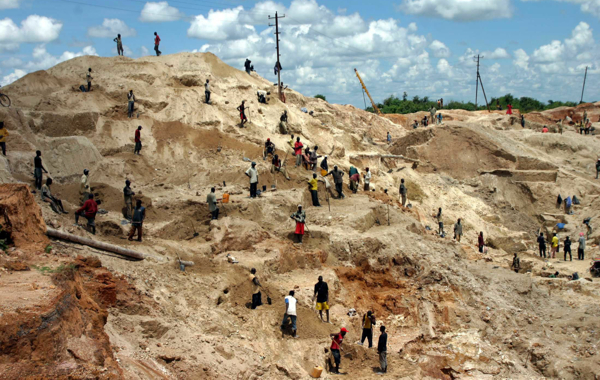
Paramaribo - Er is vandaag, vrijdag 23 mei 2014, rond het middaguur een dode gevallen bij een roofoverval op een goudzoekerskamp te Tosokreek in de omgeving van Godo Olo, in het district Sipaliwini. Zes tot zeven zwaar gewapende mannen, van wie het vermoeden bestaat dat het Brazilianen zijn, openden het vuur op het kamp. 


Een van werkers, Eric Vodi, heeft ter plekke het leven gelaten. Er waren negen mensen in het kamp op het moment van de beschieting, aldus is te lezen op Starnieuws.

De situatie in Godo Olo zou erg gespannen zijn. De rovers waren gekleed in lange groene broeken en gingen op professionele manier te werk. De mensen zijn ernstig verhit en eisen vooral bescherming. Wat nog meer kwaad bloed zet, is dat de dode nog steeds niet kan worden overgevlogen. Er is nog geen politie te Godo Olo om de zaak te onderzoeken.

Een broer van overledene, die in het kamp was tijdens de beroving, zegt zelfs zover te willen tot het kwaad met kwaad vergelden. ‘A no man go so doro. Den man kiri mi brada en den gwe nanga mi gon nanga gowktu.’ Het is nog niet duidelijk hoeveel goud de overvallers hebben buitgemaakt.

Er wordt een klopjacht gehouden door de dorpelingen en mensen van de omgeving om de daders te grijpen.

Dodelijk slachtoffer bij gewapende overval op goudzoekerskamp te Tosokreek bij Godo Olo

Zo'n zes a zeven zwaar gewapende mannen overvallen goudzoekers

Dorpelingen en niet politie openen klopjacht op overvallers

23-05-2014


Paramaribo - Er is vandaag, vrijdag 23 mei 2014, rond het middaguur een dode gevallen bij een roofoverval op een goudzoekerskamp te Tosokreek in de omgeving van Godo Olo, in het district Sipaliwini. Zes tot zeven zwaar gewapende mannen, van wie het vermoeden bestaat dat het Brazilianen zijn, openden het vuur op het kamp. 


Een van werkers, Eric Vodi, heeft ter plekke het leven gelaten. Er waren negen mensen in het kamp op het moment van de beschieting, aldus is te lezen op Starnieuws.

De situatie in Godo Olo zou erg gespannen zijn. De rovers waren gekleed in lange groene broeken en gingen op professionele manier te werk. De mensen zijn ernstig verhit en eisen vooral bescherming. Wat nog meer kwaad bloed zet, is dat de dode nog steeds niet kan worden overgevlogen. Er is nog geen politie te Godo Olo om de zaak te onderzoeken.

Een broer van overledene, die in het kamp was tijdens de beroving, zegt zelfs zover te willen tot het kwaad met kwaad vergelden. ‘A no man go so doro. Den man kiri mi brada en den gwe nanga mi gon nanga gowktu.’ Het is nog niet duidelijk hoeveel goud de overvallers hebben buitgemaakt.

Er wordt een klopjacht gehouden door de dorpelingen en mensen van de omgeving om de daders te grijpen.

Het kan dus: goudwinnen zonder kwik > Philippine miners agree to stop mercury use

Philippine miners agree to stop mercury use

Eco-friendly gold mining techniques to be brought in

23-05-2014 Jefrey Tupas, Davao City, UCANews, Bangkok, Thailand


Some 200 small-scale miners in the gold rush village of Mount Diwata in the Southern Philippines entered into an agreement with an environmental justice group on Thursday to end the use of mercury in mining.

Part of the deal calls for the group Ban Toxics!, in partnership with the UN Industrial Development Organization, and the Swedish Society for Nature Conservation, to open a mercury-free gold processing facility.

Eve Cubelo, artisanal and small-scale gold mining program manager of Ban Toxics!, said her group will introduce local miners to the 'Benguet Method', a gold mining approach used by inhabitants of the northern province of Benguet where borax, or sodium borate, are used to extract gold from ore instead of mercury.

"The method is so far the best alternative to the mining practice that involves mercury," said Cubelo, adding that they are still exploring other methods.

"Ultimately, we hope to totally eliminate the use of mercury in the small-scale mining industry," she told ucanews.com.

Pedro Samillano, village chief of Mount Diwata, said the offer from Ban Toxics! is worth a try. "We want to take part in this change," he said.

Mount Diwata is known to have one of the largest gold deposits in the country. Government estimates that some $46 million worth of gold is produced in the area annually.
Mount Diwata, however, has gained global notoriety for the use of mercury.

"We believe the small-scale miners of Mount Diwata are willing to change if they were given the chance and the choice," said Richard Gutierrez, executive director of Ban Toxics!

The facility will employ the use of Benguet method, an enhanced traditional technique utilizing gravity and borax predominantly used in the Benguet, and has been popularized by BAN Toxics in the Philippines and in other parts of the world.

Ban Toxics! will be bringing in trainers from other parts of the country, miners who have abandoned mercury use, to educate and train the small-scale miners of Mount Diwata to utilize mercury-free techniques in gold extraction. Mercury use in small-scale mining was banned by Executive Order 79 in 2012.

Although illegal, mercury can be bought at P5,000 to P8,000 per kilogram through unregulated markets. According to a study conducted by the United Nations Environment Program, artisanal and small-scale gold mining is the single largest mercury-emitting sector in the world.

The Department of Environment and Natural Resources - Environment Management Bureau (DENR-EMB) estimates the annual mercury discharge in the Philippines at around 70 metric tons.

“We have witnessed many stories of the transformation of miners who stopped using mercury in gold mining through the help of Ban Toxics!.We don’t want to be witnesses anymore. We want to take part in this change and make a positive contribution to our community,” said Barangay Mount Diwata captain Pedro Samillano.

The facility was made possible through the support of the Global Environment Facility and United Nations Industrial Development Organization (UNIDO) and in partnership with the Department of Environment and Natural Resources Environmental and Management Bureau, the Department of Health and the Swedish Society for Nature Conservation.

Noot:
Dit bericht heb ik ook gelinkt naar mijn Facebookpagina met een bericht voor Ban Toxics! dat hier, in Suriname, kleinschalige goudzoekers ook gebruikmaken van kwik in hun goudwinningsproces en dat er nauwelijks actie wordt ondernomen, door wie of wat dan ook, om de goudzoekers te ondersteunen om over te stappen op milieuvriendelijke winningsmethoden. Ban Toxics! plaatste vervolgens deze reactie:
'Thanks so much Paul. We have materials in our website, which you are most welcome to use. If there's any other help we can extend please let us know. We have helped miners in Indonesia, Tanzania, and other countries as well.'

Het kan dus: goudwinnen zonder kwik > Philippine miners agree to stop mercury use

Philippine miners agree to stop mercury use

Eco-friendly gold mining techniques to be brought in

23-05-2014 Jefrey Tupas, Davao City, UCANews, Bangkok, Thailand


Some 200 small-scale miners in the gold rush village of Mount Diwata in the Southern Philippines entered into an agreement with an environmental justice group on Thursday to end the use of mercury in mining.

Part of the deal calls for the group Ban Toxics!, in partnership with the UN Industrial Development Organization, and the Swedish Society for Nature Conservation, to open a mercury-free gold processing facility.

Eve Cubelo, artisanal and small-scale gold mining program manager of Ban Toxics!, said her group will introduce local miners to the 'Benguet Method', a gold mining approach used by inhabitants of the northern province of Benguet where borax, or sodium borate, are used to extract gold from ore instead of mercury.

"The method is so far the best alternative to the mining practice that involves mercury," said Cubelo, adding that they are still exploring other methods.

"Ultimately, we hope to totally eliminate the use of mercury in the small-scale mining industry," she told ucanews.com.

Pedro Samillano, village chief of Mount Diwata, said the offer from Ban Toxics! is worth a try. "We want to take part in this change," he said.

Mount Diwata is known to have one of the largest gold deposits in the country. Government estimates that some $46 million worth of gold is produced in the area annually.
Mount Diwata, however, has gained global notoriety for the use of mercury.

"We believe the small-scale miners of Mount Diwata are willing to change if they were given the chance and the choice," said Richard Gutierrez, executive director of Ban Toxics!

The facility will employ the use of Benguet method, an enhanced traditional technique utilizing gravity and borax predominantly used in the Benguet, and has been popularized by BAN Toxics in the Philippines and in other parts of the world.

Ban Toxics! will be bringing in trainers from other parts of the country, miners who have abandoned mercury use, to educate and train the small-scale miners of Mount Diwata to utilize mercury-free techniques in gold extraction. Mercury use in small-scale mining was banned by Executive Order 79 in 2012.

Although illegal, mercury can be bought at P5,000 to P8,000 per kilogram through unregulated markets. According to a study conducted by the United Nations Environment Program, artisanal and small-scale gold mining is the single largest mercury-emitting sector in the world.

The Department of Environment and Natural Resources - Environment Management Bureau (DENR-EMB) estimates the annual mercury discharge in the Philippines at around 70 metric tons.

“We have witnessed many stories of the transformation of miners who stopped using mercury in gold mining through the help of Ban Toxics!.We don’t want to be witnesses anymore. We want to take part in this change and make a positive contribution to our community,” said Barangay Mount Diwata captain Pedro Samillano.

The facility was made possible through the support of the Global Environment Facility and United Nations Industrial Development Organization (UNIDO) and in partnership with the Department of Environment and Natural Resources Environmental and Management Bureau, the Department of Health and the Swedish Society for Nature Conservation.

Noot:
Dit bericht heb ik ook gelinkt naar mijn Facebookpagina met een bericht voor Ban Toxics! dat hier, in Suriname, kleinschalige goudzoekers ook gebruikmaken van kwik in hun goudwinningsproces en dat er nauwelijks actie wordt ondernomen, door wie of wat dan ook, om de goudzoekers te ondersteunen om over te stappen op milieuvriendelijke winningsmethoden. Ban Toxics! plaatste vervolgens deze reactie:
'Thanks so much Paul. We have materials in our website, which you are most welcome to use. If there's any other help we can extend please let us know. We have helped miners in Indonesia, Tanzania, and other countries as well.'

donderdag 22 mei 2014

Ghana to stop handing out gold exploration permits

Ghana to stop handing out gold exploration permits 

22-05-2014  Cecilia Jamasmie | Mining.com

Ghana to stop handing out gold exploration permits 
Africa's second-largest gold producer, Ghana, will stop issuing new gold prospecting permits for an initial 90-day period, while it works on making an inventory of unused concessions, the country’s minerals commission said Thursday.

Tony Aubynn, the commission’s head, told Reuters the audit would allow the government to free up permits that can be reallocated, but warned the three-month moratorium on new warrants could be extended if necessary.

The move could be risky for the West African nation, which has been experiencing a major and ongoing drop in gold production as of late. With the gold price dropping by an average of 28% in 2013 and not doing much better this year, many mining companies operating in the country, such as AngloGold Ashanti (NYSE:AU), Newmont (NYSE:NEM) and Gold Fields (NYSE:GFI), have had to cut back.

Small-scale operations are also declining. But for them it's not just the price drop— a government crackdown on illegal mining has also affected production.

MINING.com has kept a close eye on illegal gold mining in Ghana. At its peak, an estimated 50,000 foreign workers, mainly Chinese, were operating unlawfully in the country. This prompted the government to create a taskforce in May last year to tackle the subject, and so avoid tension-generating issues, such as the massive deportation of almost two hundred of his compatriots, arrested and expulsed from Ghana last year.

Image: Aljazeera’s documentary screen grab

Ghana to stop handing out gold exploration permits

Ghana to stop handing out gold exploration permits 

22-05-2014  Cecilia Jamasmie | Mining.com

Ghana to stop handing out gold exploration permits 
Africa's second-largest gold producer, Ghana, will stop issuing new gold prospecting permits for an initial 90-day period, while it works on making an inventory of unused concessions, the country’s minerals commission said Thursday.

Tony Aubynn, the commission’s head, told Reuters the audit would allow the government to free up permits that can be reallocated, but warned the three-month moratorium on new warrants could be extended if necessary.

The move could be risky for the West African nation, which has been experiencing a major and ongoing drop in gold production as of late. With the gold price dropping by an average of 28% in 2013 and not doing much better this year, many mining companies operating in the country, such as AngloGold Ashanti (NYSE:AU), Newmont (NYSE:NEM) and Gold Fields (NYSE:GFI), have had to cut back.

Small-scale operations are also declining. But for them it's not just the price drop— a government crackdown on illegal mining has also affected production.

MINING.com has kept a close eye on illegal gold mining in Ghana. At its peak, an estimated 50,000 foreign workers, mainly Chinese, were operating unlawfully in the country. This prompted the government to create a taskforce in May last year to tackle the subject, and so avoid tension-generating issues, such as the massive deportation of almost two hundred of his compatriots, arrested and expulsed from Ghana last year.

Image: Aljazeera’s documentary screen grab

woensdag 21 mei 2014

Blokkade weg naar Afobaka door inwoners Balingsoela opgeheven

Brunswijk zorgt voor rust onder porknokkers
'Vriendjes in kringen commissie Ordening Goudsector’ in gebied Suralco waaruit porknokkers Balingsoela waren verwijderd

21-05-2014


Paramaribo - De inwoners van Balingsoela hebben de weg naar Brokopondo Centrum en naar Afobaka rond vijf uur vanmiddag, woensdag 21 mei 2014, opgeheven, door tussenkomst van ABOP-voorzitter en parlementariër Ronnie Brunswijk, die vergezeld was van A Combinatie-Assembleelid Diana Pokie en minister Edward Belfort van Justitie en Politie. Dit bericht Starnieuws.

De dorpelingen en porknokkers uit omgeving Balingsoela hebben problemen met de commissie Ordening Goudsector. Het gaat om de kwestie dam 10. Er werden goudactiviteiten ontplooid in het concessiegebied van de Suralco waar zich hulpdammen bevinden. De commissie Ordening Goudsector heeft ze enige tijd terug uit dat gebied verwijderd.

Nu blijkt volgens hen dat ‘vriendjes in de kringen van de commissie’ zich in dezelfde omgeving bevinden. Voorts zitten ze met een elektriciteitsprobleem. Geruime tijd is er sprake van elektriciteitsschommelingen met als gevolg dat hun apparaten kapot gaan. Ook het waterprobleem werd aangehaald.

Een ander brandende kwestie is die van een ondernemer die in de omgeving aan steenslagwinning doet. Deze ondernemer blijkt dynamiet te gebruiken voor de winning, waardoor stofwolken en geluidsoverlast aan de orde van de dag zijn.

Besloten is dat de vertegenwoordigers van de actiegroep binnen een week met de president om de tafel gaan. Brunswijk heeft opgeroepen niet te grijpen naar het uiterste middel. Wegbarricade is verstoring van de openbare orde. ‘Er is een districtscommissaris en er zijn parlementariërs waar de dorpelingen altijd nog terecht kunnen. Ik breng ze persoonlijk naar het hoogste gezag en dan ben ik ervan overtuigd dat er een oplossing komt’, sprak Brunswijk.

Noot:
En weer is er sprake van, dat in een goudwinningsgebied waaruit illegale porknokkers door de commissie Ordening Goudsector zijn verwijderd, binnen de kortste tijd goudzoekers actief zouden zijn uit de directe omgeving van de commissie. Waar rook is, is vuur. De geruchten over deze praktijken komen niet zomaar uit de lucht vallen. Deze commissie lijkt met een dubbele agenda te werken. Onlangs hebben de Assembleeleden Marinus Bee (ABOP) en Ronny Asabina (BEP) gepleit voor het opheffen van de commissie. Reden genoeg voor, zo lijkt mij...... ;-)